Frequently asked questions
Can you tell me more about counselling and breathwork?
Yes - you can find out more about counselling and breathwork, and some of the common reasons people attend on my counselling FAQs page and breathwork FAQs page
Where can I have sessions?
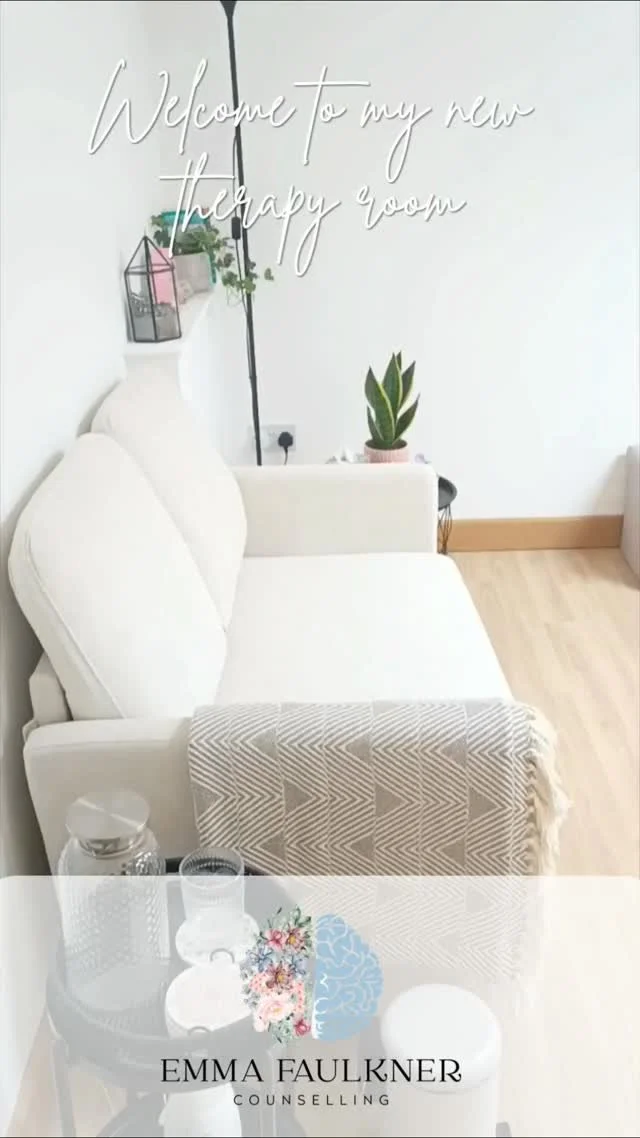
I offer sessions in-person, from my comfortable, private office in Ashford (Kent, UK), remotely via video call, or phone call. You can choose one of these, or we can use a mixture of face-to-face, online and phone-call if you prefer.
How many sessions will I need?
This really depends on what you're looking for, and what you want to work on. Generally, short-term counselling is between 6-10 sessions, long-term counselling is typically 20+ sessions. Counselling can range from a few weeks, to years - there's no right or wrong amount of time. Generally, more complex issues, or issues explored at a greater depth require more time, but it's difficult to predict at the onset how long it will take to achieve your goals. You are in complete control of the amount of time you spend in therapy, and can end sessions whenever you want to - there will never be any pressure either way.
What is Person Centred Therapy?
Person Centred therapy is centred around the belief that we all have the capacity for personal growth and healing, given the right conditions. My role as therapist is to do my best to provide these conditions for you. It's a non-directive approach which empowers the development of your autonomy and helps you to journey towards becoming the best possible version of yourself.
Person Centred therapy can:
Improve your self-awareness
Encourage personal-growth and self-acceptance
Support you in finding your own solutions to the problems you face
Strengthen your relationship with yourself, and your trust in yourself
What is Transactional Analysis?
Transactional Analysis (also referred to as ‘TA’) is built around the core concept of ‘ego states’. Psycho-education is an important part of TA theory - which means if we work with TA, I'll share elements of theory with you, so we can apply it together. According to TA, we all have three ego states within us:
Parent - Where we experience behaviours, thoughts and feelings within ourselves that we picked up from authority figures in childhood (eg: parents, teachers etc). This part is separated into two sub ego-states, the Nurturing Parent and the Critical Parent
Adult - This part of us is present in the ‘here & now’ - when we are in our Adult ego state, we are rational, objective, and present
Child - When we experience behaviours, thoughts and feelings replayed from our childhood, in the present day. This part is separated into two sub ego-states, the Free Child and the Adapted Child
All of these parts of us are necessary and useful, we all constantly (unconsciously) switch between these parts of ourselves throughout the day. Sometimes, it can be useful to gain awareness of which of these ego states is ‘in control’ in certain situations, sometimes gaining this conscious awareness can empower us to recognise the choices available to us in the present- and can help us to shift unhelpful relational dynamics.
There are many other aspects of TA theory that we might touch on during our time together, but ego-states are usually the foundational starting point.
TA as a tool in therapy can:
Improve your understanding of yourself, and the way you relate to others
Strengthen your ‘adult’ ego state, empowering you to shift unhelpful reactions and behaviours in the present
Help you to identify unhelpful patterns and ‘games’ you experience with others
What is attachment theory?
Attachment theory is built around the idea that as humans we have a biological need to form close bonds with others. Our early attachments (those formed in early childhood) shape our understanding of what it means to feel safe, secure and supported. These early attachments create a kind of ‘framework’ for how we relate to others later in life (particularly in romantic relationships, friendships and parenting). There are 4 core attachment styles, a top-level description of each could read as follows:
Secure
As a child you were able to trust your caregiver, could explore your world freely, and received consistent comfort when you were upset.
As an adult you are generally able to trust others, communicate your needs, and maintain healthy relationships.
Anxious
As a child you may have been clingy, or anxiously inclined, you may have had trouble feeling ‘secure’, even in the presence of your caregiver.
As an adult, you may want closeness, but fear abandonment. You may seem needy or over-dependent. You may need a lot of validation or reassurance from others, you may find it hard to feel ‘secure’ even when with a securely attached partner. You may find yourself ‘losing yourself’ in relationships, in an attempt to maintain the connection. You may feel absolutely fine and settled within yourself when you are single, only to find traits of anxious attachment surfacing when you are in a relationship.
Avoidant
As a child you may have appeared independent - you may have seemed ‘indifferent’ to your caregivers, avoided closeness, and possibly suppressed your feelings
As an adult, you may find yourself wanting closeness, but withdrawing when you find it. You may appear to value independence over connection. You may find yourself believing that being close to another will result in ‘losing yourself’ in a relationship, and withdraw to try to preserve your sense-of-self.
Disorganised
As a child you may have seemed confused, fearful, and both wanted and rejected closeness.
As an adult you may have difficulty regulating your emotions, your relationships might be unstable. You may both crave and fear intimacy.
The good news is that our attachment styles are not set in stone! Most people are not 100% securely attached to begin with, secure attachment is usually something that is ‘earned’ in adult life. We all typically have our ‘go to’ attachment style, but can all experience different attachment styles at different times, with different people.
Recognising your attachment style can help you to understand the patterns you typically experience in close relationships better. Usually attachment work involves exploration of our early attachments, and work around getting to know yourself in the present. This can sometimes include ‘inner child’ work - where you learn to nurture the’young’ parts of yourself that didn't get what they needed in childhood.
Attachment theory in therapy can:
Help you understand why you feel and behave the way you do in relationships
Improve understanding of the way your childhood experiences have shaped parts of your adult life
Help you identify unhelpful patterns, and beliefs you hold in relationships
Enable you to explore some of the fears underlying your attachment style, in a safe space with your therapist
Help you to identify strategies to work towards developing a secure attachment
What is Polyvagal-informed therapy?
Polyvagal theory (founded by Dr Stephen Porges), also known as “the science of connection” explores your connection with yourself, others and the world around you through the lens of the nervous system, and centres around the understanding that on an unconscious level, our brains and nervous systems are always scanning for signals of safety and danger. As I'm a polyvagal-informed practitioner we have the option to take a look at the nervous system shifts you experience as part of our exploration of your lived experience. When we use a polyvagal-informed lens, we may explore concepts such as ‘window of tolerance’.
Window of tolerance (Dr Dan Siegel) is a concept describing the nervous system state shifts we all experience in every day life, and is a way to explore the events that cause our nervous system to shift into states of fight, flight, freeze and fawn, and the ways we return to our ‘window of tolerance’. The window of tolerance itself describes a person's optimal state to experience and tolerate stress, emotions and life events- which can sometimes become disrupted if you have experienced big life events or chronic stress. The window of tolerance concept is split into three parts, as shown below:

Sometimes, as a result of big life events or chronic stress, you might become aware of mostly operating from either a sympathetic state (above window of tolerance) or dorsal vagal state (below window of tolerance). If you find you are experiencing this, we can integrate some tools and techniques to support your nervous system in attuning to cues of safety, and moving back towards your window of tolerance.
Two other key concepts in polyvagal theory include:
Interoception: Your ability to sense, interpret and understand the sensations you experience within your body
Neuroception: The unconscious process of your brain and nervous system scanning for signals of safety and danger in your environment
Another concept important to polyvagal theory is co-regulation - the understanding that we all influence each other with our nervous system states, and that the therapist's state of ‘calm’ and the connection that exists between therapist and client, can be a healing aspect of the therapeutic process.
Polyvagal theory in therapy can:
Improve your mind-body connection, building interoceptive capacity
Build understanding and awareness of your reactions - recognising that anxiety, irritability, shutdown, overwhelm or numbness may be autonomic nervous system shifts (rather than a choice you are making)
Help you to feel safer in your body or in your environment, or to understand where feelings of unsafety or unease come from (to better equip you to look after yourself)
Help you to better attune to yourself and your needs
Build your understanding of how your nervous system responds to stress, safety and relationships, enabling you to make choices to look after yourself
Help you to manage experiences or overwhelm or shutdown
Enable you to better attune to your body and nervous system states, helping you to recognise the first signs of stress
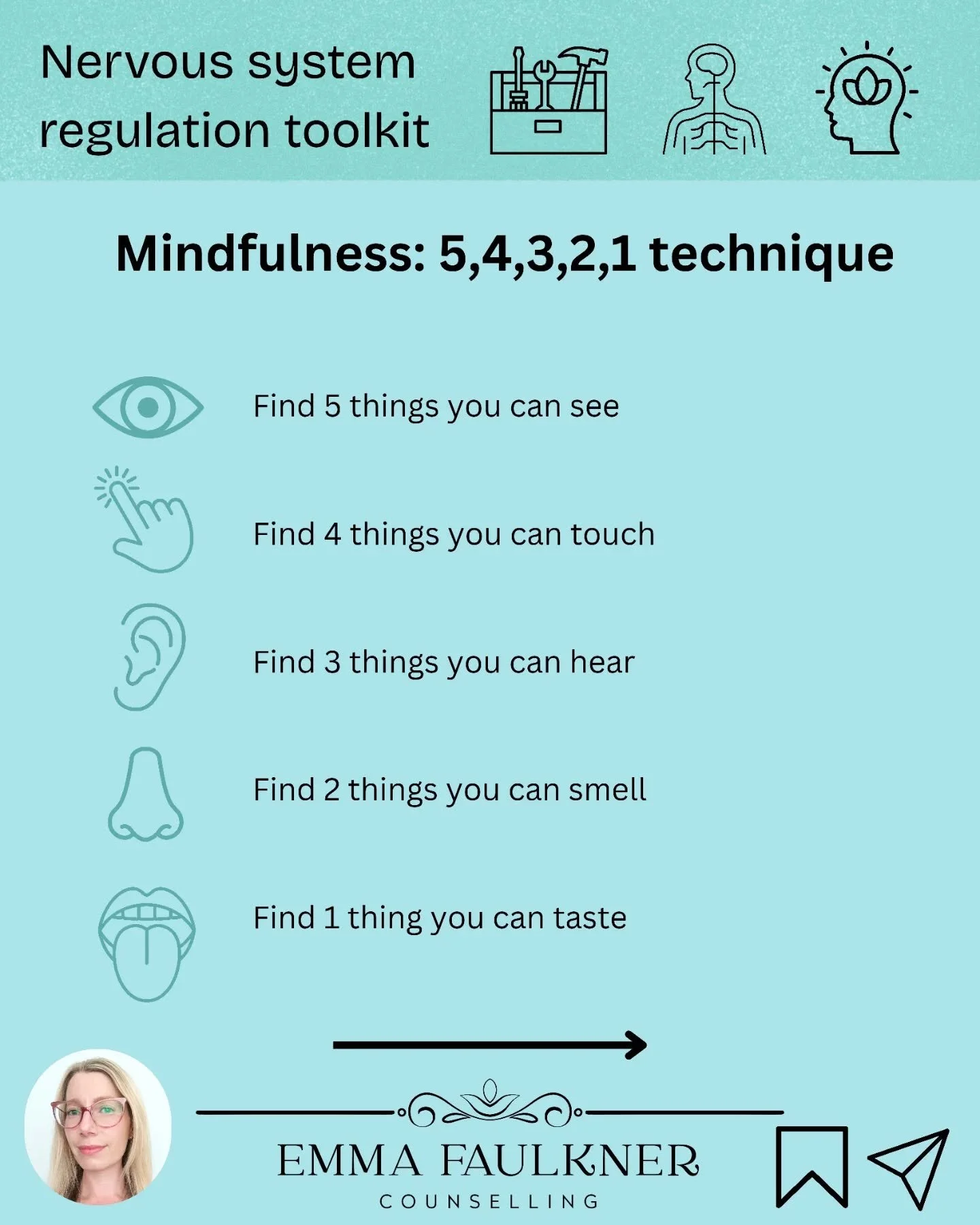
Help you to develop a set of grounding or regulation tools to reconnect with yourself
Helps you to feel more 'in touch’ with, and better able to identify your emotional states
What is Intersectionality?
Intersectionality is the observation and awareness of the ways in which the different parts of a person's identity ‘intersect’, to shape their experience of privilege and disadvantage, access to opportunities, and discrimination. As a therapist, this lens is an important way for me to view you - and myself, as the unique individuals we both are; recognising that you and I will have very different lived experiences, as a result of our differently intersecting identities. This enables us to explore your experiences with consideration of how intersectionality affects you, alongside your lived experiences, societal expectations, and sense of self.
Intersectionality is an essential lens for modern therapy, and helps therapists to avoid the application of unsuitable theory, expectations or unhelpful assumption.
Examples of intersecting identifiers may include:
gender and gender identity
race or ethnicity
socioeconomic background
disability
sexuality
age
religion or culture
neurodivergence
mental health issues
What is mindfulness?
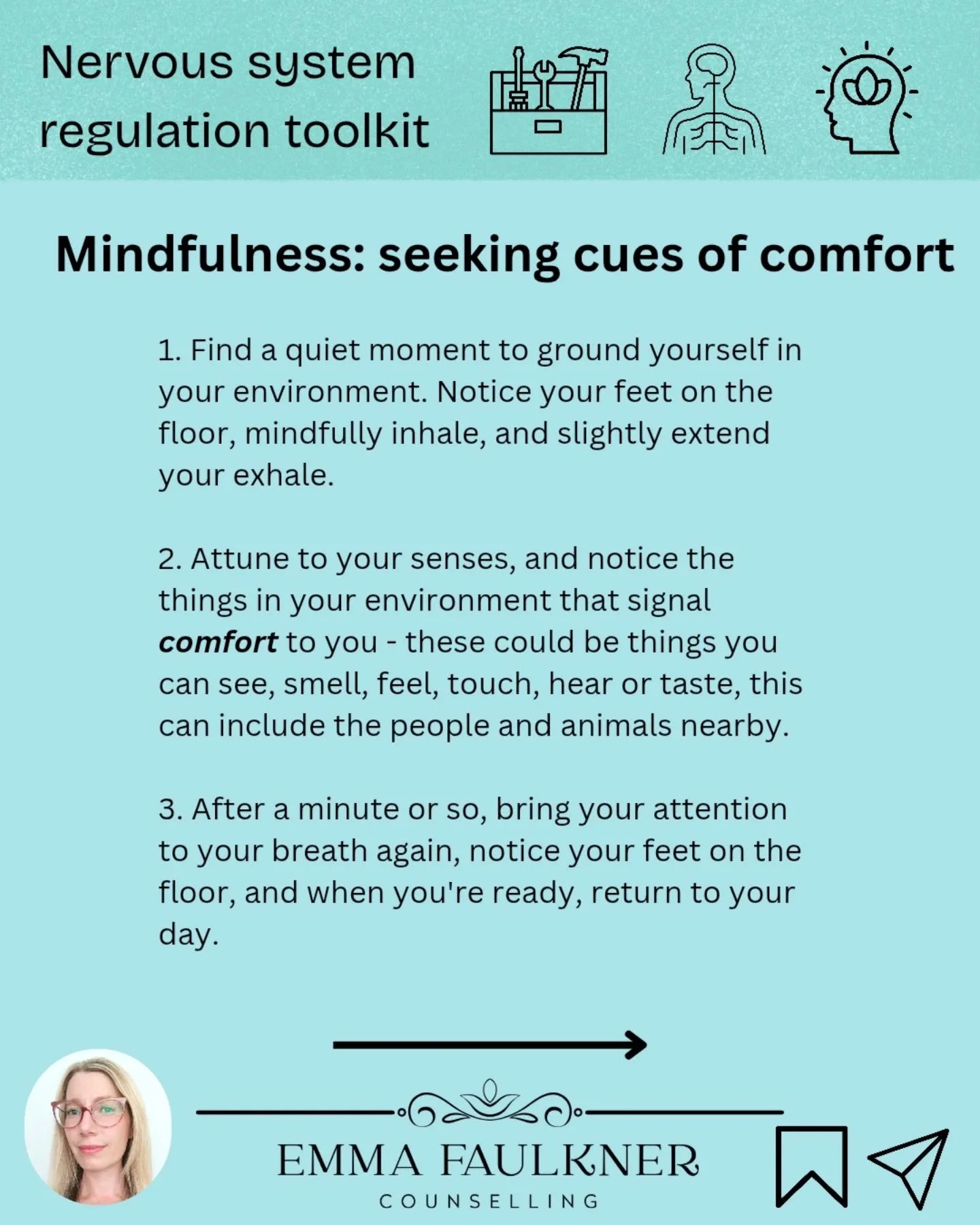
Mindfulness is the development of your capacity to be present in the moment. When you are present, you are more likely to notice the nuance of your experiences - and the way you are feeling. This increased self-awareness can enable you to make choices to better look after yourself. In my work I will often combine mindfulness practice (and breathwork) with polyvagal-informed therapy, to increase interoceptive or neuroceptive awareness.
What does it mean to be a neuro-affirming practitioner?
As neuro-affirming practitioner I approach my work with the intention to validate and actively support neurodivergent identities and experiences. I work with the neurodiversity paradigm, which views neurodivergence as a natural variation in human beings (rather than the medical model of deficit). I hold mindful awareness that most counselling theory was created with neurotypical needs in mind - and therefore requires adjustment for real-world application. I use an intersectional lens, with the intention of working with you, and your needs, as an individual.
Although neurodivergence is not an area of specialism for me, my clinical supervisor specialises in working with neurodivergence, so I am well supported and advised in my work.
What is psycho-education?
Psycho-education occurs when a therapist shares aspects of theory they think might be helpful for their client. My practice is centred around empowerment, so psycho-education is an important component of the way I work; as it gives you the agency to self-apply theory, and for us to co-create our sessions. I may occasionally introduce theory to our sessions that I think might be useful, relevant or interesting to you. You will always have choice about whether to continue to apply this theory in your processing. There are limitations to every theory, and sometimes recognising that an element of theory, tool or practice doesn't feel like a good fit for you, can in itself lead to a greater level of self-awareness. When we find an aspect of theory that feels like a good fit, this can be a very empowering experience.
I'm on an NHS waiting list, but it's really long. Can I come to you for sessions until a space is ready for me?
Yes - once you've identified that counselling is needed, a long waiting list can be detrimental to your mental wellbeing. I've often worked with clients ‘bridging the gap’ until their NHS referral comes through. You can find details of my fee and contact me to book a free of charge 20 minute intro-call here.
Any questions I haven’t answered? Contact me here